
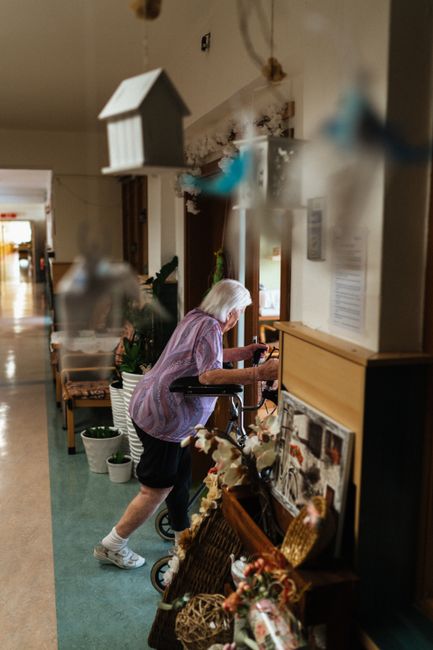
Visual impairment can affect much more than reading signs or recognizing faces. In assisted living, changes to lighting, room arrangement, communication, and daily routines can help a resident move safely, make choices, and remain involved in familiar activities.
What adaptations help seniors with visual impairments in assisted living?
The most useful adaptations make important features easier to see, hear, locate, or feel. They should be based on the resident’s specific vision condition, remaining sight, mobility, hearing, and daily habits.
Helpful changes may include:
- Brighter, evenly distributed lighting
- Clear contrast between floors, walls, furniture, and doorways
- Unobstructed walking paths
- Consistent placement of personal belongings
- Large-print, high-contrast labels
- Tactile or raised markings on frequently used items
- Verbal descriptions of surroundings and activities
- Staff guidance that respects independence rather than taking over
Vision loss is not the same for everyone. Someone with central vision loss may struggle to read menus or recognize faces, while someone with peripheral vision loss may miss obstacles at the side. Glare, dim lighting, poor contrast, depth-perception changes, and difficulty adjusting between bright and dark spaces can also affect safety.
How should lighting be adjusted?
Lighting should be bright enough for the task but arranged to reduce glare and sharp shadows. A brightly lit room can still be difficult to navigate if light reflects from polished floors or shines directly into a resident’s eyes.
In a private room, useful adaptations may include:
- A lamp or light switch that can be reached easily from the bed
- Even lighting between the bed, bathroom, and doorway
- Night lighting along the route to the bathroom
- Task lighting for reading, grooming, crafts, or medication management
- Window coverings that reduce glare while allowing useful daylight
- Light switches with contrasting plates or raised markers
Hallways, stair areas, lounges, and dining spaces should not have abrupt changes from bright areas to dark areas. This is especially relevant during darker winter afternoons and evenings in Hanover, PA, when residents may move between naturally lit areas and indoor spaces.
Motion-activated lighting can be useful in some locations, but controls should not be so unpredictable that a resident is left in darkness. Any automated system should be tested with the individual who will use it.
Why do color and contrast matter?
Contrast helps a person distinguish one object from another. A white plate on a light-colored table may be difficult to see, while a plate that contrasts with the table surface is easier to locate.
Examples of practical contrast include:
- A dark-colored toilet seat against a light bathroom surface
- Bright tape on the edge of a step
- Light switches that contrast with the wall
- Dark furniture against a lighter wall
- A contrasting strip around a doorway
- Solid-colored dishes instead of patterned dishes that hide food
- Dark writing on a matte, light background
The goal is not to decorate every room with bright colors. Too many competing patterns can make spaces harder to interpret. Simple, consistent visual cues are usually more helpful than busy designs.
How can falls be reduced?
Falls are a major concern because impaired vision can make it harder to detect changes in floor level, loose objects, wet surfaces, or furniture edges. Environmental changes should be combined with appropriate footwear, safe mobility habits, medication review, and regular eye care.
Walking paths should remain clear from the bed to the bathroom, seating areas, dining spaces, and exits. Common hazards include:
- Small tables moved into an established pathway
- Footstools or chairs with low visual contrast
- Loose rugs or curled edges
- Cords across the floor
- Open cabinet doors
- Wet bathroom floors
- Personal items left near the bed or walker
Furniture should remain in familiar locations whenever possible. If a room must be rearranged, the change should be explained before the resident begins walking through it. A brief orientation walk can help the person learn the new route.
Stairs and changes in floor height require particular care. Handrails, clear edges, adequate lighting, and high-contrast markings may help. A single step that blends into the surrounding floor can be difficult to detect even when the room appears well lit.
What changes are useful in bathrooms and dining areas?
Bathrooms should have clear paths, stable support surfaces, and lighting that does not create strong reflections in mirrors or on wet floors. Contrasting grab bars, faucets, toilet seats, and towel holders may make fixtures easier to locate.
In dining areas, residents may benefit from:
- Consistent seating locations
- Verbal descriptions of where food and utensils are placed
- Plates with contrasting colors
- Cups with easily recognized shapes or handles
- Adequate lighting without glare
- Staff describing spills or obstacles promptly
A useful verbal description might explain that the fork is to the left of the plate and the beverage is above the plate rather than simply pointing toward the item. The “clock face” method may also help, such as describing food as being at the 12 o’clock or 6 o’clock position.
How should staff communicate with a resident who has low vision?
Staff should identify themselves when approaching, speak directly to the resident, and explain before touching or guiding. A person with limited sight may not know who is speaking or where the speaker is standing.
Helpful communication habits include:
- Say the resident’s name before giving instructions
- Identify yourself when entering or leaving
- Use specific directions instead of “over there”
- Describe obstacles, room changes, and approaching people
- Tell the resident when a conversation is ending
- Ask before moving personal items
- Offer an elbow for guidance rather than pulling the person
- Allow extra time for the resident to respond and move
A person who appears hesitant may not be confused. They may be adjusting to glare, shadows, an unfamiliar arrangement, or a transition from one lighting level to another.
What assistive tools can support independence?
Simple tools can make everyday tasks easier. Depending on the person’s abilities, useful options may include large-print clocks, talking watches, magnifiers, high-contrast calendars, tactile labels, illuminated magnification, and phones or tablets with enlarged text and spoken prompts.
Medication containers, clothing storage, and personal-care items may be easier to identify with raised labels, bold markings, distinct shapes, or consistent storage locations. Any labeling system should be simple enough to use when the resident is tired or experiencing reduced vision.
Technology can help, but it should not replace clear environmental design. A voice assistant, talking device, or electronic reminder is most useful when the resident understands how to operate it and has a dependable backup if the device fails.
How can families and residents prepare for a move?
Before moving into assisted living, residents and families can document what helps the person see and navigate safely. Useful information includes:
- Preferred lighting levels
- Sensitivity to glare
- Common routes and routines
- Successful glasses or magnification strategies
- Whether the person uses a cane or other mobility aid
- Difficulty recognizing faces, reading, or judging steps
- Preferred ways to receive directions
A new room should be explored during daylight and again under evening lighting. The resident can practice finding the bathroom, closet, dining area, common room, and emergency exit. If seasonal conditions bring snow, wet footwear, darker walkways, or reduced outdoor visibility, indoor routes and entrances may require additional attention.
Changes in vision should not automatically be treated as a normal part of aging. New blurriness, missing areas of vision, flashes, eye pain, sudden difficulty seeing, or a noticeable increase in falls warrant prompt medical attention. Regular eye examinations can also identify conditions that may be treatable or manageable.
The best adaptation plan combines safety with choice. Residents should be encouraged to use the tools, routines, and environmental cues that allow them to participate as independently as possible.
